what does black smoke from exhaust mean?
Maybe someone has mentioned your car is producing black smoke on acceleration or when you’ve pulled away from a junction you’ve noticed a cloud of dark smoke in the mirror.
Black smoke from exhaust systems is usually a sign that the engine is burning too much fuel or not burning fuel efficiently.
In simple terms, the combustion process is out of balance.
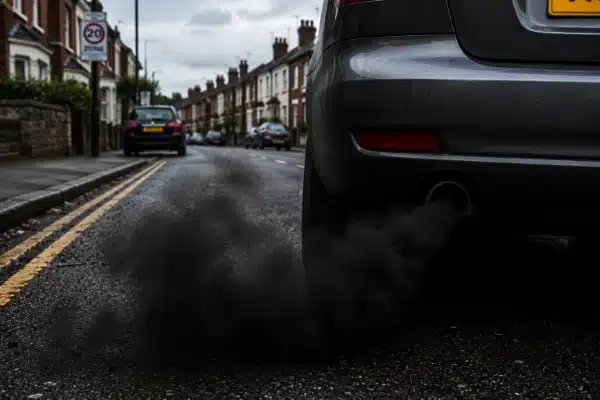
Sometimes it only appears under heavy throttle. Other times it becomes more constant, especially during acceleration uphill or motorway driving.
Modern petrol and diesel vehicles are designed to run relatively clean. Visible excessive exhaust smoke is normally a sign that something inside the engine, fuel system or emissions system is no longer working correctly.
Sometimes the issue is minor. Sometimes it points to developing faults involving injectors, airflow, turbo systems, EGR valves or DPF-related problems.
This guide explains:
- What black smoke from the exhaust actually means
- Why it often happens under acceleration
- The most common causes
- Whether it is dangerous
- What symptoms to look out for
- When diagnostics are recommended
What Does Black Smoke From Exhaust Mean?
Black exhaust smoke usually means the engine is running rich.
This means too much fuel is being injected compared to the amount of air available during combustion.
When fuel cannot burn properly, excess carbon particles leave through the exhaust as black soot or smoke.
These issues combined can prevent the system from regenerating efficiently and eventually lead to warning lights, reduced performance and potential limp mode conditions.
What black smoke often looks like
Drivers commonly notice:
- Dark smoke when accelerating hard
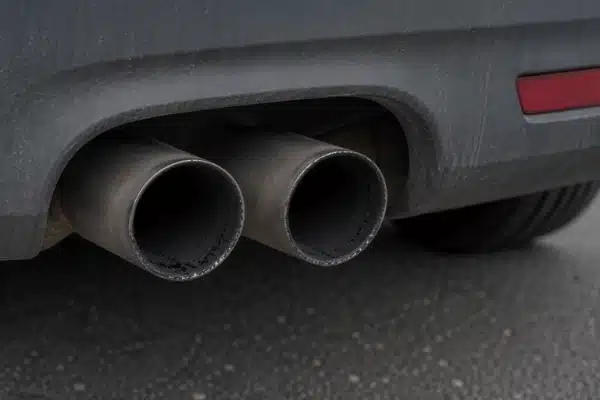
- Black soot around the exhaust tip
- Smoke during overtaking or motorway driving
- Smoke under heavy load or towing
- Occasional black puffs during gear changes
In diesel vehicles, some light soot under hard acceleration can be relatively normal. However, continuous or excessive smoke from exhaust systems should usually be investigated.
Why Does Black Smoke Happen During Acceleration?
Black smoke on acceleration often appears because the engine demands more fuel under load.
If airflow, fuel delivery or turbo performance is compromised, the fuel-air balance becomes inefficient and soot production increases.
Acceleration places higher demand on:
- Turbo systems
- Fuel injectors
- Airflow sensors
- Intake systems
- EGR systems
This is why some vehicles appear normal while idling but produce smoke once driven harder.
Common Causes of Black Smoke From Exhaust
There is no single cause of excessive exhaust smoke.
Several systems can contribute to incomplete combustion.
Carbon Build-Up Inside the Engine
Carbon accumulation is one of the most common causes seen in modern diesel engines.
Over time, soot and oily residue build up inside:
- EGR valves
- Intake manifolds
- Turbo components
- Intake systems
- DPF systems
This restricts airflow and affects combustion efficiency.
When airflow becomes restricted, the engine may inject more fuel than the available oxygen can burn properly, leading to black smoke.
This is especially common in vehicles used mainly for:
- Short journeys
- Stop-start traffic
- Low-speed commuting
- Urban driving

Faulty Fuel Injectors
Fuel injectors must deliver precise amounts of fuel at the correct pressure and spray pattern.
If an injector starts over-fuelling or spraying unevenly, combustion quality drops.
Symptoms can include:
- Black smoke on acceleration
- Rough idle
- Poor engine performance
- Increased fuel consumption
- Diesel smell
- Engine knock or vibration
Injector imbalance is a common issue on higher-mileage diesel vehicles.
Turbocharger Problems
Turbochargers increase airflow into the engine.
If the turbo is not producing correct boost pressure, the engine may still inject fuel intended for higher airflow levels.
This imbalance can produce black smoke from the exhaust.
Possible turbo-related causes include:
- Boost leaks
- Split intercooler hoses
- Failing turbochargers
- Sticking turbo vanes
- Underboost conditions
Drivers may also notice:
- Increased fuel usage
- Sluggish acceleration
- Whistling noises
- Reduced pulling power
Dirty or Faulty Airflow Sensors
Modern engines rely heavily on airflow data.
If the mass airflow sensor (MAF) or MAP sensor provides incorrect readings, fuelling calculations can become inaccurate.
This can lead to:
- Excessive fuelling
- Black smoke from exhaust systems
- Hesitation
- Flat acceleration
- Poor MPG
Sometimes these faults trigger warning lights.
EGR Valve Problems
The EGR valve helps reduce emissions by recirculating exhaust gases.
When it sticks or becomes heavily contaminated with carbon deposits, airflow and combustion efficiency suffer.
This may cause:
- Black smoke from exhaust
- Rough running
- Flat spots during acceleration
- Hesitation
- DPF-related problems
EGR contamination is extremely common on modern diesel vehicles.

DPF Problems and Regeneration Issues
Diesel particulate filters are designed to trap soot before it exits the exhaust.
If the DPF system is struggling to regenerate properly, soot levels can rise throughout the system.
This may contribute to:
- Increased smoke
- Reduced performance
- Frequent regenerations
- Engine warning lights
- Limp mode activation
In some cases, drivers mistake active DPF regeneration smoke for ongoing faults, which is why proper diagnostics matter.
Can Black Smoke Damage the Engine?
Potentially yes.
The smoke itself is not the issue. The underlying cause is what matters.
Ignoring excessive exhaust smoke can eventually contribute to:
- Turbo damage
- DPF blockage
- Injector wear
- Increased carbon build-up
- Catalytic converter problems
- Reduced fuel efficiency
In diesel engines particularly, long-term over-fuelling can accelerate soot accumulation across multiple systems.
Is Black Smoke From Exhaust an MOT Failure?
It can be.
In the UK, excessive visible smoke may fail an MOT emissions test, especially if:
- Smoke levels are clearly excessive
- The DPF has been removed or modified
- Emissions systems are malfunctioning
- Warning lights are present
Modern emissions testing has become stricter, particularly for diesel vehicles.

What Drivers Often Notice Alongside Black Smoke
Black smoke from exhausts rarely appears completely on its own.
Drivers often notice other symptoms developing at the same time.
These may include:
- Poor fuel economy
- Sluggish acceleration
- Rough idle
- Hesitation
- Increased regenerations
- Engine warning lights
- Loss of power
- Diesel smell
- Excessive soot around the tailpipe
These symptoms often point towards wider combustion or airflow issues.
Why Short Journeys Make Black Smoke Worse
Modern diesel engines are designed to operate at full temperature for sustained periods.
Short journeys often prevent:
- Proper combustion temperatures
- Effective DPF regeneration
- Moisture evaporation
- Carbon burn-off

Over time, soot and carbon deposits build up faster inside the engine and emissions systems.
This is something commonly seen on vehicles used mainly for school runs, commuting and local driving around towns and cities.
What Happens During Engine Diagnostics for Black Smoke From Exhaust?
A proper diagnostic inspection should go far beyond simply reading fault codes.
A specialist will normally assess:
- Live airflow data
- Turbo boost readings
- Injector correction values
- Fuel pressure
- EGR operation
- DPF soot levels
- Regeneration history
- Temperature readings
- Smoke behaviour under load
The aim is to identify why combustion is becoming inefficient.
This evidence-led process is important because multiple faults can create similar smoke symptoms.
Can Engine Carbon Cleaning Help?
In some cases, yes.
If carbon deposits are restricting airflow or affecting combustion efficiency, professional engine carbon cleaning may help restore smoother engine operation.
This can sometimes help reduce:
- Excessive soot
- Hesitation
- Flat acceleration
- Rough running
- DPF stress
However, carbon cleaning is not a replacement for proper diagnostics.
Underlying faults such as injector problems or turbo issues still need identifying correctly.
Petrol vs Diesel Black Smoke
Black smoke is more common in diesel engines due to the way diesel combustion works.
However, petrol vehicles can also produce black smoke if running excessively rich.
Petrol-related causes may include:
- Faulty oxygen sensors
- Failed fuel pressure regulators
- Injector faults
- Ignition problems
- Airflow sensor issues
Diesel engines tend to produce heavier soot levels when faults develop because combustion relies heavily on precise air-to-fuel balance under pressure.
Frequently Asked Questions About Black Smoke From Exhaust
what does black smoke from exhaust mean?
Black smoke usually means the engine is burning too much fuel or not burning fuel efficiently. Common causes include injector faults, carbon build-up, turbo problems, airflow sensor faults or EGR issues.
Is black smoke from exhaust dangerous?
It can indicate developing engine or emissions faults. While the vehicle may still drive normally initially, ignoring the issue can eventually lead to more serious problems and increased repair costs.
Why does my car produce black smoke on acceleration?
Acceleration increases fuel demand. If airflow or combustion efficiency is compromised, excess fuel may leave the exhaust as black smoke.
Can a blocked DPF cause black smoke?
Yes. A struggling or partially blocked DPF system can contribute to increased soot production and smoke-related symptoms.
Does black smoke mean the turbo is failing?
Not always. Turbo problems are one possible cause, but injector faults, airflow issues and carbon build-up can create similar symptoms.
Is black smoke normal in diesel cars?
A small puff under heavy acceleration can sometimes be normal in older diesel vehicles. Constant or excessive smoke is not considered normal and should usually be checked.
Can bad injectors cause excessive exhaust smoke?
Yes. Over-fuelling injectors are one of the most common causes of black smoke from exhaust systems.
identifying the cause of Black Smoke early
Black smoke from the exhaust is usually a sign that the combustion process is no longer operating efficiently.
Sometimes the issue is relatively minor. Other times it points to developing faults involving airflow, fuelling, turbo performance or emissions systems.
The important thing is identifying the actual cause early.
Modern vehicles generate large amounts of live diagnostic data, and proper analysis often reveals far more than a simple fault code scan alone.
If your vehicle is producing excessive exhaust smoke, struggling under acceleration or showing signs of poor engine performance, proper diagnostics can usually provide a much clearer understanding of what is happening before the problem worsens.