Why Is My DPF Light On and What Does It Mean?
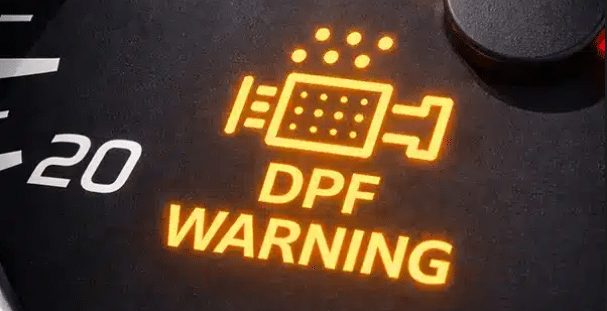
If you’ve noticed the DPF warning light on your dashboard it doesn’t always mean the diesel particulate filter itself has failed. It is one of the most common problems affecting modern diesel vehicles and in many cases, the warning light is simply telling you that the filter cannot regenerate properly or that another issue elsewhere in the engine is preventing the system from working as intended.
Understanding why the warning has appeared is the first step towards fixing the problem correctly.
Here we explain what the DPF warning light means, why it sometimes refuses to clear and how proper diagnostics can identify the real cause.
Contents
- What the DPF warning light means
- What the diesel particulate filter does
- Why the DPF light stays on
- Common causes of DPF regeneration problems
- What symptoms often appear alongside a DPF warning
- Can you keep driving?
- Why diagnostics matter
- Frequently asked questions
What Is the DPF?
The diesel particulate filter, often shortened to DPF, is part of the vehicle’s emissions system.
Its job is to trap soot particles produced during normal diesel combustion before they leave the exhaust.
Without a DPF, modern diesel vehicles would produce far higher levels of particulate pollution.
As soot gradually builds up inside the filter, the vehicle periodically cleans it by carrying out a process called regeneration.
What Is DPF Regeneration?
DPF regeneration is the process of burning accumulated soot inside the filter.
During regeneration, exhaust temperatures increase enough to convert the trapped soot into a much smaller amount of ash.
When everything is working correctly, most drivers never even notice regeneration taking place.
However, regeneration only succeeds if several conditions are met.
The engine needs to be operating correctly, temperatures must be high enough and the vehicle usually needs to be driven continuously for long enough to complete the process.
Why Is My DPF Warning Light On?
A DPF warning light usually means the filter has become more restricted than the vehicle considers acceptable.
This may happen because:
- Regeneration has failed repeatedly.
- The vehicle has been driven mainly on short journeys.
- Another engine fault is preventing regeneration.
- Soot levels have become too high.
- Sensor readings are inaccurate.
The warning light is not always telling you the DPF itself is faulty.
Quite often, the filter is simply reacting to another problem elsewhere in the engine.
Why Won’t My DPF Light Go Off?
Many drivers assume a motorway journey will automatically clear the warning.
Sometimes it does.
Often it doesn’t.
If the vehicle cannot complete regeneration because another fault is present, the warning light will usually remain illuminated regardless of how long you drive.
This is why repeatedly attempting motorway runs without diagnostics often fails to solve the problem.
Common Causes of DPF Regeneration Problems
Several different faults can prevent successful regeneration.
Frequent Short Journeys
One of the biggest causes of DPF problems is repeated short-distance driving.
If the engine never reaches full operating temperature, regeneration cycles are interrupted before they finish.
Over time, soot continues building until the warning light appears.
This is especially common for vehicles used mainly for:
- School runs
- Local commuting
- Town driving
- Stop-start traffic
Carbon Build-Up
Carbon deposits can gradually restrict airflow throughout the engine.
If combustion efficiency drops, soot production increases.
More soot entering the exhaust means the DPF fills more quickly.
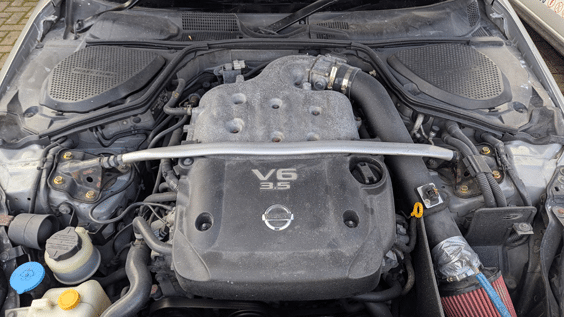
Carbon build-up commonly affects:
- EGR valves
- Intake manifolds
- Turbo components
- Intake systems
Drivers may also notice:
- Rough idle
- Loss of power
- Poor fuel economy
- Black smoke
- Hesitation
Faulty Differential Pressure Sensor
The differential pressure sensor measures pressure before and after the DPF.
This allows the engine control unit to estimate how restricted the filter has become.
If the sensor gives inaccurate readings, the vehicle may incorrectly believe the DPF is blocked.
Possible symptoms include:
- DPF warning light
- Engine management light
- Reduced power
- Incorrect regeneration behaviour
Sensor faults are far more common than many drivers realise.
Exhaust Temperature Sensor Problems
Successful regeneration depends on accurate exhaust temperature readings.
If temperature sensors provide incorrect information, regeneration may be cancelled before it begins or interrupted part way through.
The result can be repeated regeneration failures and increasing soot accumulation.
Faulty EGR Valve
A sticking EGR valve can increase soot production.
Because the DPF sits further down the exhaust system, it has to deal with this additional soot.
Over time this causes:
- Faster DPF loading
- More regeneration attempts
- Increased fuel consumption
- Poor engine performance
The DPF warning light may simply be highlighting a problem that actually started with the EGR system.
Injector Problems
Poor injector performance affects combustion quality.
Incomplete combustion creates additional soot, which the DPF must then capture.
Drivers may notice:
- Rough idle
- Diesel knock
- Black smoke
- Higher fuel consumption
- Hesitation
Injector imbalance is a common contributor to recurring DPF problems.
Turbo Problems
Turbo faults can affect airflow and combustion efficiency.
Reduced airflow often leads to increased soot production.
Possible turbo-related causes include:
- Boost leaks
- Split intercooler hoses
- Underboost
- Sticking turbo vanes
Although the DPF warning appears, the actual fault may originate within the turbo system.
Incorrect Oil Specification
Many modern diesel engines require low-ash engine oil.
Using the wrong specification increases ash deposits inside the DPF.
Unlike soot, ash cannot be burned away during regeneration.
Eventually the filter becomes permanently restricted.
Following the manufacturer’s oil specification is essential for long-term DPF health.
What Symptoms Often Appear Alongside a DPF Warning Light?
A DPF warning rarely appears completely on its own.
Drivers often notice:
- Poor fuel economy
- Loss of power
- Rough idle
- Increased engine fan activity
- Higher idle speed
- Reduced throttle response
- Black smoke
- Engine management light
- Reduced power warning
- Limp mode
These additional symptoms often provide valuable clues during diagnostics.
Can You Keep Driving With the DPF Warning Light On?
Sometimes.
If the warning has only just appeared and the vehicle is driving normally, following the manufacturer’s guidance may allow regeneration to complete.
However, continuing to drive with an unresolved DPF problem can eventually lead to:
- Limp mode
- Severe power restriction
- Failed regeneration
- Excessive soot loading
- More expensive repairs
If the warning is accompanied by loss of power, heavy smoke or additional warning lights, the vehicle should be diagnosed rather than simply driven harder.
Why Clearing the Warning Light Doesn’t Fix the Problem
The warning light is the result of a fault.
It is not the fault itself.
Clearing fault codes without identifying why regeneration failed simply removes the symptom temporarily.
If the underlying issue remains, the warning will usually return.
In many cases, valuable diagnostic information such as freeze-frame data is also lost when codes are cleared too early.
Why Proper Diagnostics Matter
A DPF warning light can have dozens of possible causes.
For example:
- A blocked EGR valve can prevent successful regeneration.
- A faulty temperature sensor may cancel regeneration.
- A pressure sensor can falsely report excessive restriction.
- Injector faults may increase soot production.
- Turbo problems may affect combustion efficiency.
Without diagnostics, these faults often look identical from the driver’s perspective.
The objective is to identify why the DPF warning appeared rather than simply cleaning or replacing the filter.
A proper diagnostic inspection may include:
- Live soot loading
- Differential pressure readings
- Exhaust temperature analysis
- Regeneration history
- Injector correction values
- Turbo boost readings
- Airflow analysis
- Sensor testing
- Visual inspection of related systems
Can Engine Carbon Cleaning Help?
Engine carbon cleaning may help if carbon build-up is contributing to poor combustion, restricted airflow or increased soot production.
Over time, carbon deposits inside the intake system, EGR valve and turbo components can reduce engine efficiency. This often causes the engine to produce more soot than normal, placing additional strain on the DPF.
When diagnostics confirm that carbon build-up is part of the problem, professional engine carbon cleaning may help:
- Improve combustion efficiency
- Reduce soot production
- Restore smoother engine performance
- Improve throttle response
- Support more effective DPF regeneration
However, engine carbon cleaning is not a replacement for proper diagnostics.
If the DPF warning light has been caused by a faulty sensor, injector problem, turbo fault or failed regeneration, those issues still need to be repaired first.
Can a Blocked DPF Damage the Engine?
A blocked DPF is unlikely to damage the engine immediately, but continuing to drive with a severely restricted filter can create additional problems.
As back pressure builds within the exhaust system, the engine has to work harder to push exhaust gases through the filter.
This can contribute to:
- Increased fuel consumption
- Reduced engine performance
- Turbocharger stress
- Frequent regeneration attempts
- Limp mode activation
- Engine overheating in severe cases
The earlier the underlying problem is identified, the less likely it is to develop into a more expensive repair.
Can a DPF Be Saved or Does It Need Replacing?
Not every DPF warning light means the filter needs replacing.
Many filters can be restored if the underlying cause is identified early enough.
For example, if regeneration has failed because of:
- A faulty pressure sensor
- Carbon build-up
- An EGR valve issue
- Injector imbalance
- A boost leak
then repairing those faults may allow the DPF to function normally again.
However, if the filter has become heavily contaminated with ash, physically damaged or melted due to excessive temperatures, replacement may eventually become necessary.
This is why diagnosing the cause is far more important than assuming the filter itself has failed.
How to Reduce the Risk of Future DPF Problems
Although not every DPF issue can be prevented, there are several ways to reduce the risk.
Good maintenance habits include:
- Servicing the vehicle on time.
- Using the correct low-ash engine oil.
- Avoiding repeated short journeys where possible.
- Allowing regeneration cycles to complete.
- Investigating warning lights promptly.
- Fixing injector or turbo faults early.
- Keeping the engine running efficiently.
Many recurring DPF problems actually begin elsewhere in the engine.
Keeping the entire combustion system healthy helps reduce soot production in the first place.
Our Approach: Which? Trusted Trader Certified Specialists
We are fully insured, IMI Certified, and Which? Trusted Trader approved.

Honest Diagnostics & Certified Expertise
☑️ Full live data diagnostics
☑️ Honest advice, no unnecessary cleaning
☑️ Which? Trusted Trader approved
☑️ Fully insured and IMI Certified
DPF Light On?
If your DPF light is on and won’t go off, a proper live data diagnostic inspection can usually determine why regeneration has stopped working and what needs attention to restore the system.
At F5ECC, live data diagnostics are used to look beyond the fault code and understand how the engine is behaving in real driving conditions.
Frequently Asked Questions About the DPF Warning Light
Why is my DPF warning light on?
The DPF warning light usually means the diesel particulate filter has become restricted or regeneration has failed. However, the underlying cause may be another engine fault rather than the filter itself.
Why won’t my DPF light go off after a motorway drive?
If another problem is preventing regeneration, such as a faulty sensor, injector issue or airflow fault, the warning light will usually remain on regardless of how far you drive.
Can short journeys cause DPF problems?
Yes. Frequent short journeys prevent the engine reaching the temperatures needed to complete DPF regeneration, allowing soot to build up over time.
Can carbon build-up cause DPF regeneration problems?
Yes. Carbon build-up can reduce combustion efficiency, increasing soot production and making successful regeneration more difficult.
Can a faulty sensor trigger the DPF warning light?
Yes. Differential pressure sensors and exhaust temperature sensors play a major role in DPF operation. Incorrect readings can trigger warning lights even if the filter itself is not badly blocked.
Is it safe to drive with the DPF warning light on?
If the vehicle is driving normally and the warning has only just appeared, you may be able to drive carefully for a short period. However, if the warning is accompanied by reduced power, heavy smoke or limp mode, diagnostics should be carried out as soon as possible.
Does a DPF always need replacing?
No. Many DPF problems are caused by issues elsewhere in the engine. Identifying and repairing the underlying fault can often restore normal DPF operation without replacing the filter.