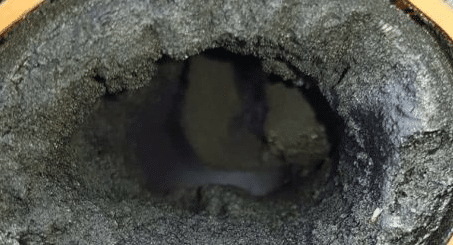
What causes carbon build-up in engines?
When an engine is new, it runs smoothly and quietly, delivers good fuel economy, and produces low emissions.
All internal combustion engines (ICE) no matter whether petrol, diesel, LPG, hybrid, methane, or any other hydrocarbon all create carbon build up as a natural product of burning fuel. This gather over time affecting performance, combustion efficiency and if left long enough component wear/failure.
In this article we will discuss the background, a little bit of the science, some of the knock-on effects of not dealing with it and how we can help to minimise the issue.

Reviews For our Carbon Cleaning


Car running a lot better
Highly recommend

The V6 in the xfs is a quiet, smooth, powerful unit and I was not sure of what improvements I would get. Well, I’m impressed. The power delivery is smoother, the engine even quieter and 6 mpg better to boot.
If you want to do one thing to maintain and improve your motor, then this is what you should do.

Very knowledgeable guy, I was really impressed.
Car drives much better now, highly recommend.
Thanks Adrian
Marius Popa


Very knowledgeable on issues with electrical problems with my car.
Arrived on time and completed the work as you would expect from a good reliable company.


He set up within 5 minutes and went on to the diagnostics and talked me through what was coming up after a reset all was clear. It took about 1 hour in total great job well happy would definitely recommend Adrian well mannered gentleman.
C8H18 + Air (mainly N2 + O2) → CO2 + H2O + CO + C + NOx
This is an example of incomplete combustion of octane.
Alongside carbon dioxide and water, it produces carbon monoxide, solid carbon particles (soot), and nitrogen oxides.
The ratio of these by-products varies depending on driving style, engine condition, fuel quality, and temperature.
All internal combustion engines (ICE) create carbon as a natural result of burning fuel.
Note the ‘bad stuff’ in orange.
- Fuel economy drops
- The engine becomes noisier
- Performance feels less responsive
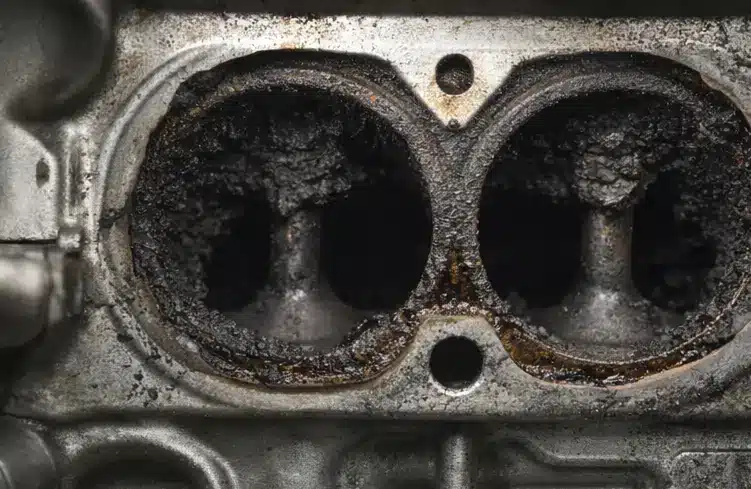
This cycle explains what causes carbon build-up in an engine to get worse over time. Dirty combustion creates more deposits, which then create even dirtier combustion.
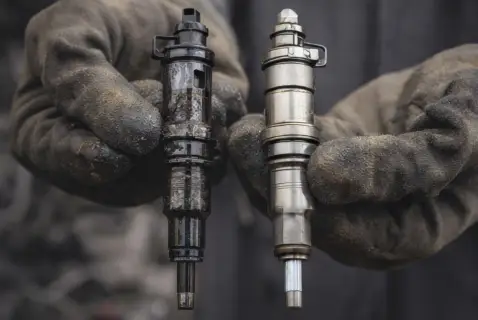
- Fuel injectors
- Engine mounts
- Clutches and flywheels
- Catalytic Converters
- Combustion Chamber
- EGR valves and EGR systems
- Injector Tips
- Pistons and Cylinders
- Inlet manifolds
- Intake ports and valves
- Turbo Vanes
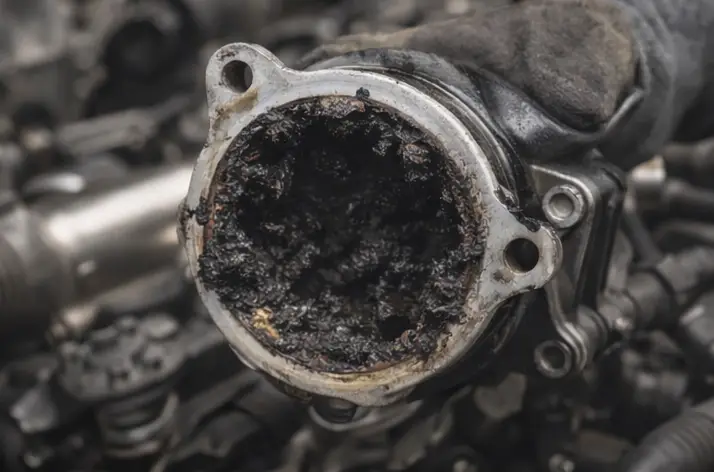
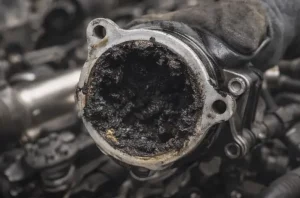
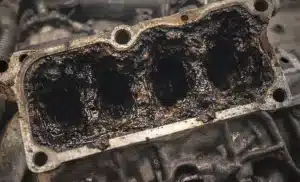
These restrictions cause vibration, sluggishness, over-fuelling and further reduce airflow, making the problem worse and accelerating a build up of carbon.
Even with cleaner fuels and modern additives, carbon build up does not disappear completely. Modern engines simply create the conditions for it to form.