
Common Causes of Slow Acceleration & What to Check First
If you’re asking, “Why is my car slow to accelerate?”, you’re not alone.
This is one of the most common concerns we hear from drivers, and it often develops gradually rather than appearing overnight.
slow Acceleration Rarely Has One Single Cause
Modern vehicles rely on multiple systems working together. When acceleration feels flat or delayed, it’s usually because efficiency has been lost somewhere in the process, rather than because one part has suddenly failed.

That loss of efficiency can come from combustion, airflow, exhaust flow, sensor data or control strategies adjusting to protect the engine.
Common Reasons a Car Is Slow to Accelerate
Combustion Inefficiency
The frustrating part is that a car can feel sluggish even when there are no warning lights on the dashboard. In many cases, the vehicle still drives, but it no longer responds the way it used to.
Here we’ll explain the most common reasons a car becomes slow to accelerate, what’s usually happening behind the scenes, and why guessing rarely leads to the right fix.
Efficient acceleration relies on clean, controlled combustion. Over time, carbon build-up can affect how fuel burns inside the engine.
When combustion becomes inefficient:
- Power delivery feels delayed
- Throttle response becomes softer
- The engine works harder to achieve the same output
This is a very common cause of gradual performance loss, particularly on diesel vehicles.
Exhaust Flow Restrictions
If exhaust gases cannot exit the engine efficiently, acceleration suffers.
Common contributors include:
- DPF restrictions
- Incomplete regeneration cycles
- Increased exhaust backpressure
When the exhaust system is restricted, the engine cannot breathe properly, which limits power delivery.
Sensor Data Outside Expected Ranges
A car can feel slow even when no fault code is present.
Live data diagnostics often reveal:
- Incorrect airflow readings
- Exhaust temperature values that don’t match demand
- Fuel pressure behaviour outside expected limits
- Low coolant temperatures due to faulty thermostats

When codes are logged the ECU can often respond by limiting power to protect the engine.
Turbo-Related Issues
On turbocharged vehicles, acceleration depends heavily on correct boost control.
Issues may include:
- Underboost and/or overboost conditions
- Boost control inconsistencies
- Turbo response delays
These problems don’t always trigger immediate warning lights but can significantly affect how the car feels.
Reviews For our Carbon Cleaning, DPF & Engine Diagnostics Services

And I have used his services again today on my peugeot expert work van
Diagnostics done and a carbon clean
The van now seems more responsive and smoother on acceleration
What can I say
DONT HESITATE TO USE ADRIAN
as his service is excellent. Keep up the good work 10/10


He explained everything clearly and carried out a carbon clean and diagnostics.
Good service.

Done loads of checks .didn't leave untill thay were happy
Fast efficient give advice . Fast efficient
Left advice receipt and information


The car already feels smoother to drive and more responsive.
Really clean setup, well organised, and great customer service. I’d definitely recommend this to anyone wanting to improve their engine performance and look after their car properly. I’ll 100% be back again in the future


After 150,000 miles my BMW was running a bit rough. The engine clean has the straight six running as smooth as butter.
I could not be happier.
Frequent Short Journeys
Short journeys prevent the engine from reaching optimal operating temperature.
This leads to:
- Increased soot production
- Reduced combustion efficiency
- Incomplete exhaust system operation
- Failed particle filter regeneration
Many drivers experience sluggish acceleration simply due to driving patterns rather than component failure.
Why Acceleration Problems Often Come with Poor Fuel Economy
Slow acceleration and declining fuel economy usually go hand in hand.
When efficiency is lost, the engine compensates by using more fuel to achieve the same output. This often happens gradually, which is why drivers don’t always notice straight away.
Poor MPG is often an early indicator that something is no longer operating as intended.
How does Carbon Build-Up Affect Acceleration?
Carbon buildup affects multiple areas involved in power delivery.
Over time, deposits can influence:
- Injector performance
- Combustion chamber efficiency
- Turbo hot-side components
As carbon builds up, the engine becomes less responsive and less efficient, contributing to slower acceleration, increased emissions, more frequent regeneration and component blockages
Why Warning Lights Don’t Always Appear
Many drivers assume that if there’s no warning light, there’s no problem.
In reality, control systems often adapt gradually. The ECU may reduce performance to stay within safe operating limits without triggering a fault.

Live data diagnostics are often the only way to see these changes developing.
Should I Keep Driving If My Car Is Slow to Accelerate?
In most cases, yes, but it’s important to understand why the issue has developed.
Continuing to drive without investigation can:
- Increase strain on emissions systems
- Lead to further efficiency loss
- Cause additional faults to develop
Early diagnosis often prevents larger issues later.
Why Diagnostics Should Come with Any Cleaning or Repairs
One of the biggest mistakes is trying ‘fixes’ without understanding the cause. Reading codes and replacing parts based on codes alone often does not fix the root cause.
Live data diagnostics allow assessment of:
- How the engine responds under in real-time
- Exhaust temperature behaviour
- Regeneration activity
- Fuel and air balance
This information is essential before deciding whether cleaning, repair or further investigation is appropriate.
When Engine Carbon Cleaning Helps
Engine carbon cleaning is suitable typically after 20k miles and then on a regular basis going forward.
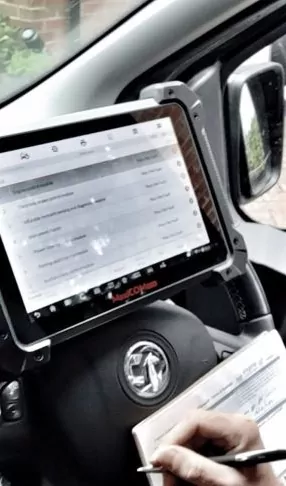
when diagnostics confirm that there are no mechanical/electrical faults present that could hinder the effectiveness of the clean
Regular engine carbon cleans help:
- Restore lost responsiveness
- Recover smoother power delivery
- Restore quiet engine running
- Recover lost fuel economy
- Reduce excessive soot production
It should never be used to compensate for unresolved faults.
When Cleaning Will Not Resolve Slow Acceleration
Cleaning alone will not resolve acceleration issues caused by:
- Mechanical faults
- Sensor failures
- Severe exhaust restrictions
- Electrical control issues
In these cases, cleaning may temporarily mask symptoms without fixing the root cause.
Reviews For our Carbon Cleaning, DPF & Engine Diagnostics Services
And I have used his services again today on my peugeot expert work van
Diagnostics done and a carbon clean
The van now seems more responsive and smoother on acceleration
What can I say
DONT HESITATE TO USE ADRIAN
as his service is excellent. Keep up the good work 10/10
He explained everything clearly and carried out a carbon clean and diagnostics.
Good service.
Done loads of checks .didn't leave untill thay were happy
Fast efficient give advice . Fast efficient
Left advice receipt and information
The car already feels smoother to drive and more responsive.
Really clean setup, well organised, and great customer service. I’d definitely recommend this to anyone wanting to improve their engine performance and look after their car properly. I’ll 100% be back again in the future
After 150,000 miles my BMW was running a bit rough. The engine clean has the straight six running as smooth as butter.
I could not be happier.
Preventing Acceleration Problems in the Future
Prevention focuses on maintaining efficiency over time.
This includes:
- Regular engine carbon cleaning to maintain a clean, healthy engine
- Addressing warning signs early
- Regular Live data diagnostics
- Maintaining overall engine health with regular servicing and good fuel
Acceleration loss rarely happens suddenly unless there is a component issue. There are usually early indicators that can be identified in advance.
So, if you’re asking, ‘Why Is My Car Slow to Accelerate?’
It’s usually a sign that efficiency has been lost somewhere in the system.
Understanding what the engine is doing, rather than guessing based on symptoms, leads to better outcomes and fewer repeat issues.
Our Approach
☑️ Full live data diagnostics
☑️ Honest advice, no unnecessary cleaning
☑️ Which? Trusted Trader approved
☑️ Fully insured and IMI Certified